
You’ve invested in a new website. It looks professional, the photographs are lovely and you’re genuinely pleased with how everything has turned out.
There’s just one problem.
Nobody seems to be getting in touch.
It’s a frustrating situation, particularly when you’ve spent time and money creating something you’re proud of. But a website that looks good isn’t necessarily a website that generates business.
The good news is that there are often perfectly fixable reasons why visitors aren’t turning into enquiries.
Let’s look at some of the most common.
1. Visitors Can’t Immediately Tell What You Do
This sounds obvious, but you’d be surprised how many websites make visitors work to understand what the business actually offers.
A beautiful photograph and a clever headline might look impressive, but if someone has to scroll halfway down the page to discover what you do, you’re making life unnecessarily difficult.
Imagine landing on a website that says:
“Creating exceptional experiences through innovative solutions.”
It sounds impressive enough. But what does the business actually sell?
Now compare that with:
“Professional Garden Maintenance for Homes and Businesses Across Dorset.”
It’s not particularly clever, but it’s immediately useful.
Visitors should be able to understand what you offer, who you help and why they might choose you within moments of arriving.
Clarity beats cleverness almost every time.
2. You’re Attracting the Wrong Visitors
Not all website traffic is equally valuable.
You might be getting hundreds of visitors every month, but if they’re not looking for your particular services, they’re unlikely to become customers.
This is where search engine optimisation becomes important.
For example, a business offering commercial landscaping services in Poole probably doesn’t need visitors searching for gardening tips in Australia.
It needs local businesses looking for someone to maintain their grounds.
The difference is search intent.
Good SEO isn’t simply about attracting more visitors. It’s about attracting the right visitors.
Take a look at which searches are bringing people to your website and whether those searches match the services you want to promote.
Google Search Console can be particularly helpful here.
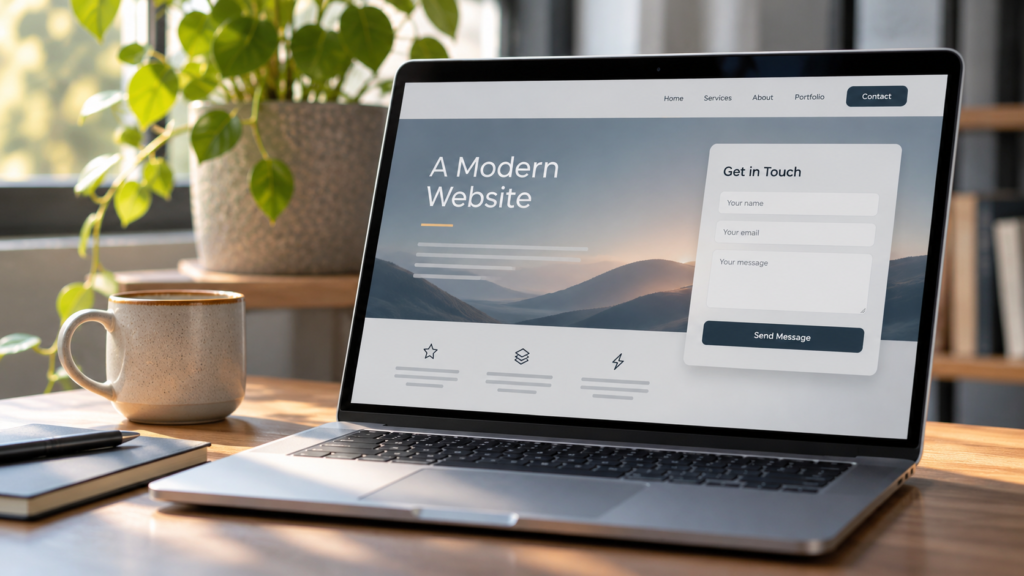
3. Your Calls to Action Aren’t Clear Enough
You’ve explained your services, shown off your work and hopefully convinced visitors that you know what you’re doing.
Now what?
If the next step isn’t obvious, people may simply leave.
Every important page should give visitors a clear way to move forward.
That might be:
- Request a quote
- Book a consultation
- Arrange a free trial
- View recent projects
- Call to discuss your requirements
The wording should reflect what your customers actually want to do.
And don’t assume everyone will automatically head to your contact page.
A well-placed call to action at the end of a service description can make the process considerably easier.
You don’t need flashing buttons or aggressive sales messages. Just a clear, helpful invitation.
4. Your Website Doesn’t Give People Enough Reasons to Trust You
Before someone fills out a contact form or picks up the phone, they need to feel comfortable that your business is legitimate and capable.
This is particularly important for service-based businesses where customers are buying expertise rather than a physical product.
Think about what would reassure someone who has never heard of you before.
Do you show examples of your work? Are there genuine customer testimonials? Can visitors see who they’ll be dealing with?
Real photographs, detailed case studies, professional credentials and clear contact information can all help.
And if you’re a local business, make that clear too.
Someone looking for a tradesperson in Bournemouth may feel more comfortable contacting a company that demonstrates genuine experience working in the area.
Trust isn’t built through one impressive statement. It’s created through lots of small, reassuring details.
5. Your Website Is Difficult to Use on a Phone
It’s easy to spend hours perfecting a website on a large desktop monitor, only to discover that the mobile experience isn’t quite as polished.
Perhaps the text is too small, the menu is awkward or the contact button disappears somewhere below a huge image.
These might seem like minor inconveniences, but they can be enough to put people off.
Try using your website as a potential customer would.
Pick up your phone and attempt to find a particular service, read about it and submit an enquiry.
Is everything straightforward?
Can you tap the buttons comfortably? Does the page load quickly? Is the contact form easy to complete?
If not, you’ve identified somewhere worth improving.
6. You’re Asking for Too Much Information
Speaking of contact forms, this is another common stumbling block.
It’s tempting to ask potential customers for every detail you might possibly need.
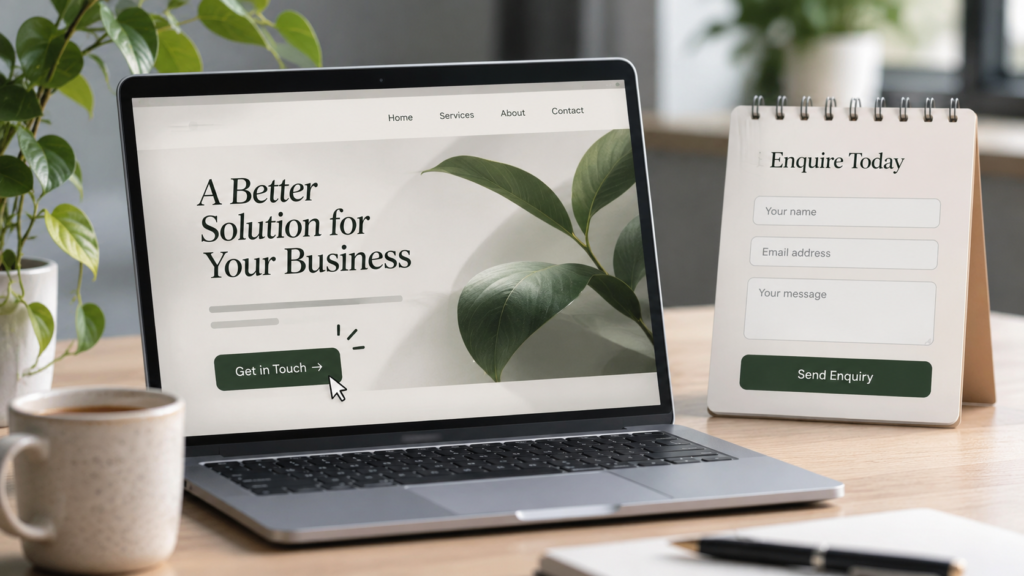
Their name, company, address, telephone number, budget, preferred timescale, how they heard about you and a detailed description of their requirements.
But remember, someone making an initial enquiry may not be ready to provide all that information.
They might simply want to ask a question.
The more complicated the form, the more effort you’re asking visitors to make.
Consider which details you genuinely need at this stage.
Often, a name, email address and message are enough to start a conversation.
You can always ask for more information later.
7. Your Website Doesn’t Reflect What Makes You Different
Here’s something worth thinking about.
If you replaced your business name with a competitor’s, would the content on your website still make sense?
If the answer is yes, you may not be communicating what makes your business special.
Lots of companies promise excellent service, competitive prices and a professional approach.
Those things are important, but they’re also what customers expect.
What can you tell people that makes your business genuinely different?
Perhaps you have decades of specialist experience. Maybe customers deal directly with the business owner rather than a call centre.
You might offer a particularly flexible service, have an impressive portfolio or specialise in an area your competitors don’t cover.
Whatever it is, make sure visitors can find it.
People need a reason to choose you, not simply a list of reasons why you’re competent.
8. You’re Not Measuring What’s Happening
Finally, it’s worth asking whether you actually know how your website is performing.
It’s easy to assume a website isn’t working because enquiries are quiet, but without any data, you’re largely guessing.
Google Analytics and Google Search Console can help you understand how visitors find your website and which pages they use.
You can also track important actions, such as contact form submissions or clicks on telephone links.
This information can reveal whether your problem is attracting visitors in the first place or persuading existing visitors to get in touch.
Those are two very different problems, and they need different solutions.
It’s much better to make improvements based on evidence than to redesign everything and hope for the best.
Does Your Website Need a Complete Redesign?
Not necessarily.
Sometimes the most effective improvements are surprisingly small.
Rewriting an unclear headline, simplifying a contact form, adding genuine testimonials or improving the mobile navigation could make a meaningful difference.
Other times, particularly if the website is outdated or difficult to maintain, a more substantial redesign may be worthwhile.
The important thing is to understand what’s wrong before deciding how to fix it.
A new design won’t automatically solve problems with unclear messaging, poor search visibility or the wrong target audience.
Final Thoughts
A successful business website needs to do more than make a good first impression.
It needs to help the right people find you, understand what you offer, trust your business and feel confident about taking the next step.
That doesn’t mean every website needs complicated features or an elaborate marketing strategy.
Often, the best results come from getting the fundamentals right.
At Neon Web Design, I create websites for businesses in Poole, Bournemouth and beyond, combining thoughtful design with practical functionality and a clear focus on business goals.
If your website looks the part but isn’t bringing in the enquiries you’d hoped for, it might be worth finding out why.
Because a good-looking website is lovely. A good-looking website that helps your business grow is even better.